WEEK 2: POSTURE II MEANING OF POSTURE
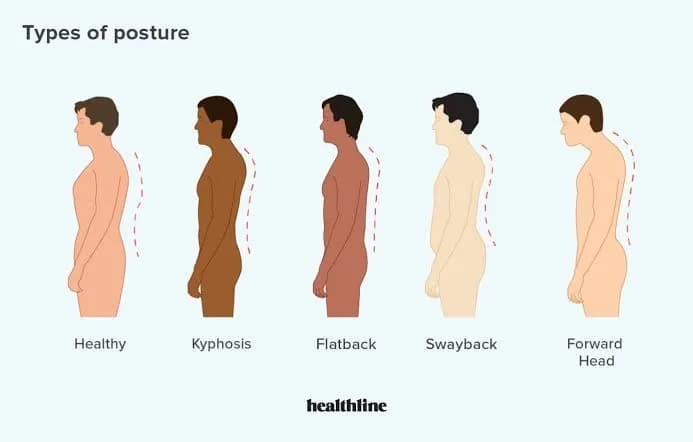
- Posture is the way the body is positioned, arranged, or carried when performing different activities such as sitting, standing, walking, or lifting objects.
- It involves the alignment of the bones (skeleton), muscles, and joints in a way that ensures the body is balanced, stable, and efficient in movement.
- Good posture does not only refer to “looking straight” but also to the correct positioning that reduces strain on the muscles, ligaments, and joints, thereby preventing tiredness and injury.
- Posture can be of two main types:
- Good (Correct) Posture – when the body is aligned properly and muscles are not strained.
- Bad (Incorrect) Posture – when the body is poorly aligned, leading to unnecessary pressure on muscles and bones.
IMPORTANCE OF GOOD POSTURE
Good posture is very important in daily living and overall health. Its importance includes:
- Prevents pains in the back, neck, and shoulders.
- Reduces the risk of joint problems and deformities.
- Promotes healthy growth and development of the bones and muscles in children and adolescents.
- Helps internal organs (lungs, heart, stomach, etc.) to function well because they are not squeezed.
-
Psychological/Appearance Benefits:
- Makes a person look attractive, smart, and confident.
- Boosts self-esteem and personal presentation in public.
- Helps the body to use energy more efficiently, reducing fatigue.
- Improves balance and stability, preventing falls and accidents.
- Enhances performance in sports, physical activities, and even academic tasks (because good sitting posture helps concentration).
APPROPRIATE POSTURE IN SITTING
When sitting, the following guidelines should be followed:
- Sit upright, keeping the back straight and supported by the chair.
- Keep the shoulders relaxed and not raised or bent forward.
- Both feet should rest flat on the ground or on a small footrest.
- Knees should be bent at a right angle (90°) with thighs parallel to the floor.
- The head should face forward and not be bent too low for long periods (e.g. while reading or writing).
- Avoid slouching, twisting, or sitting on only one side of the buttocks.
- Do not sit for excessively long periods without stretching.
Effects of Bad Sitting Posture:
- Hunched back (hunchback or kyphosis).
- Fatigue and poor concentration.
APPROPRIATE POSTURE IN STANDING
When standing:
- Stand erect and upright, keeping the body balanced.
- Distribute weight equally on both feet; do not rest weight on one leg for too long.
- Feet should be slightly apart, not too close together.
- The head should be up and facing forward, with chin slightly tucked in.
- Shoulders should be held back, relaxed, and level.
- Avoid bending forward or slouching.
Effects of Bad Standing Posture:
- Curved spine (lordosis or scoliosis).
APPROPRIATE POSTURE IN WALKING
Good walking posture means walking naturally, gracefully, and with balance:
- Walk tall with the head upright, looking forward (not always down).
- Keep the back straight and shoulders relaxed.
- Swing the arms naturally by the sides in rhythm with steps.
- Place each foot forward in a straight line, heel first, followed by the toes.
- Maintain a natural rhythm; avoid rushing unnecessarily or dragging the feet.
Effects of Bad Walking Posture:
APPROPRIATE POSTURE IN LIFTING OBJECTS
When lifting objects, especially heavy ones, the following steps should be observed:
- Preparation: Stand close to the object with feet apart for balance.
- Bending: Bend the knees and squat down while keeping the back straight.
- Grip: Hold the object firmly with both hands.
- Lifting: Straighten the knees to lift, while keeping the object close to the body.
- Carrying: Maintain balance by holding the object in front, not far from the chest.
- Avoid: Twisting or bending the waist when lifting, as it strains the back muscles.
Effects of Bad Lifting Posture:
- Back injuries and waist pains.
- Muscle strain.
- Long-term spinal deformities.
CONSEQUENCES OF BAD POSTURE
If correct posture is not maintained, the following negative consequences may occur:
- Health problems: Back pain, stiff neck, joint pain, headaches.
- Bone deformities: Hunchback (kyphosis), swayback (lordosis), or sideways curve of the spine (scoliosis).
- Poor appearance: A person looks dull, lazy, or careless.
- Reduced efficiency: Bad posture makes the body easily tired and reduces productivity.
- Breathing and digestion problems: Poor posture can press on internal organs.
EVALUATION
- Define posture in your own words.
- Mention four importance of good posture.
- Describe the correct posture for sitting.
- State three guidelines for maintaining good posture in standing.
- Explain how objects should be lifted properly.
- List three consequences of bad posture.
ASSIGNMENT
- Draw and label the correct posture for:
- sitting,
- standing, and
- lifting objects.
- Write five daily activities where good posture must be observed.
- Differentiate between good posture and bad posture (at least four points).

 REGIS INTERNATIONAL MONTESSORI SCHOOL