
 REGIS INTERNATIONAL MONTESSORI SCHOOL
WEEK 6: POULTRY EQUIPM ENT
Introduction
Poultry farming requires more than just birds and feed — it also needs proper tools and equipment to ensure smooth management, feeding, watering, and housing of birds.
Poultry equipment refers to the various tools, machines, and facilities used in raising and managing poultry birds efficiently.
These equipment make the work easier, save time, and help maintain hygiene and good production. The type of equipment used depends on the scale of production — whether small (backyard), medium, or large (commercial).
IMPORTANCE OF POULTRY EQUIPMENT
Efficient Management: Helps the farmer to care for the birds easily and effectively.
Better Feeding and Watering: Ensures birds get enough clean feed and water.
Reduced Labour: Saves time and effort through mechanized processes.
Improved Hygiene: Keeps the poultry house neat and prevents diseases.
Increased Production: Leads to healthy and fast-growing birds.
Prevents Feed Wastage: Helps control how much feed birds consume.
Protects Eggs and Birds: Reduces damage and injury through proper handling.
TYPES OF POULTRY EQUIPMENT AND THEIR USES
Poultry equipment can be grouped into different categories based on their functions:
FEEDING EQUIPMENT
These are tools used to give food to poultry birds. Common feeding equipment includes:
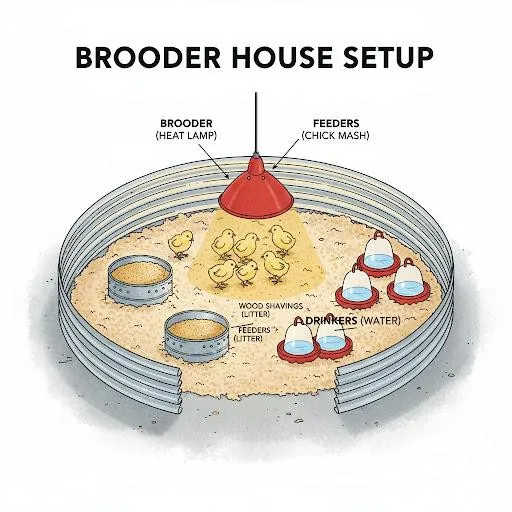
Feeders: Containers or troughs used for supplying feed to birds. They can be made of plastic, metal, or wood.
Function: To hold and dispense feed without wastage.
Types:
Manual feeders – filled by hand.
Automatic feeders – feed birds automatically in large farms.
Feed Storage Bins: Used to store feed in bulk and keep it dry and safe from pests.
Function: To preserve feed quality and prevent spoilage.
Care of Feeding Equipment:
Clean daily to remove leftover feed.
Protect from moisture and rodents.
Store in a dry place.
WATERING EQUIPMENT
These are tools used to supply clean water to birds.
Drinkers: Containers used by poultry to drink water. They come in different types and sizes depending on the age of the birds.
Types:
Manual drinkers (plastic or metal).
Automatic drinkers (nipple or bell type).
Function: To ensure birds have a constant supply of clean water.
Water Troughs: Long containers used especially for larger birds.
Water Tanks: Used to store water for daily use.
Care of Watering Equipment:
Wash daily with clean water and disinfect regularly.
Avoid algae growth and contamination.
Ensure constant water flow in automatic systems.
HEATING EQUIPMENT
Used to provide warmth to chicks that cannot regulate their body temperature. This is very important in the brooding stage (first 4–8 weeks).
Common heating equipment includes:
Brooders: Provide controlled heat and light for chicks.
Types:
Coal or charcoal stove brooders.
Kerosene or gas brooders.
Electric brooders.
Function: To keep chicks warm, especially at night or during cold weather.
Infrared Lamps or Bulbs: Produce both light and heat for young chicks.
Charcoal Pots: Simple local heaters used in small-scale poultry farms.
Care:
Regulate temperature to avoid overheating.
Keep fire sources safe and away from litter materials.
LIGHTING EQUIPMENT
Light helps birds to feed, drink, and lay eggs properly. Examples include:
Electric Bulbs or Tubes – used for both light and heat.
Solar Lamps – used where electricity is unavailable.
LED Lights – energy-efficient lighting for large poultry farms.
Functions of Lighting Equipment:
Encourages feeding and growth, especially in chicks.
Improves egg production in layers.
Provides warmth when needed.
EGG HANDLING EQUIPMENT
Used in farms that produce eggs. Examples:
Laying Nests: Small boxes where hens lay eggs. They provide comfort and reduce egg breakage.
Egg Crates or Trays: Used to collect and store eggs safely.
Egg Candlers: Used to check the quality of eggs by shining light through them.
Egg Incubators: Machines that hatch eggs artificially by maintaining temperature and humidity.
Care:
Clean nests and trays regularly.
Disinfect incubators after each use.
SANITATION AND MAINTENANCE EQUIPMENT
Used to maintain cleanliness and hygiene in the poultry house. Examples include:
Scrapers and Brushes: For removing droppings and dirt.
Disinfectant Sprayers: Used to apply disinfectant and kill germs.
Buckets and Brooms: For general cleaning.
Wheelbarrows and Shovels: For carrying litter and manure.
Importance:
Reduces disease outbreak.
Keeps the house neat and odour-free.
Promotes healthy growth and productivity.
OTHER EQUIPMENT
Perches: Wooden bars fixed inside the house for birds to rest on.
Ventilation Fans: Improve air circulation in large poultry houses.
Feed Mill Machines: For grinding and mixing feed ingredients.
Scales: For weighing birds or feed accurately.
MAINTENANCE OF POULTRY EQUIPMENT
Proper care and maintenance ensure long-lasting use and good hygiene.
Tips for Maintenance:
Wash feeders and drinkers daily.
Disinfect equipment weekly to kill germs.
Repair or replace damaged tools immediately.
Store equipment in a clean, dry area when not in use.
Regularly check electrical equipment for faults.
Keep heating equipment safe from litter materials to prevent fire.
Avoid rust by cleaning and drying metal equipment after washing.
SUMMARY
Poultry equipment are essential tools for feeding, watering, heating, lighting, and maintaining poultry.
They include feeders, drinkers, brooders, incubators, and cleaning tools.
Proper care, cleaning, and maintenance improve productivity and reduce losses.
The choice of equipment depends on the size of the poultry farm and the age of the birds.
EVALUATION:
Define poultry equipment.
Mention five examples of poultry equipment and their uses.
List three heating equipment and state their importance.
Explain why sanitation equipment is important in poultry farming.
Describe two ways of maintaining poultry equipment.
ASSIGNMENT:
State five functions of poultry equipment.
Write short notes on feede
rs, drinkers, and brooders.
Differentiate between manual and automatic feeders.
List four examples of egg handling equipment and their uses.
Suggest five safety measures to observe when using heating equipment.