Mathematics Class Note: Probability
Class: S.S. 2
Subject: Mathematics
Topic: Probability
Curriculum: Standard Curriculum
Introduction to Probability
In our daily lives, we constantly make decisions based on uncertainty. Whether we are deciding to carry an umbrella because of a cloudy sky or predicting which team will win a football match, we are intuitively assessing likelihoods. In mathematics, probability is the formal study of uncertainty. It provides a numerical measure, ranging from 0 to 1, of how likely an event is to occur.
An event that is absolutely impossible has a probability of 0, while an event that is absolutely certain to happen has a probability of 1. All other uncertain events fall somewhere along this spectrum.
Core Concepts
To master probability, we must first understand its foundational vocabulary and mathematical framework:
- Experiment: Any process or trial that yields an observable result (e.g., tossing a coin or rolling a die).
- Outcome: A single possible result of an experiment (e.g., landing on a '4' when rolling a die).
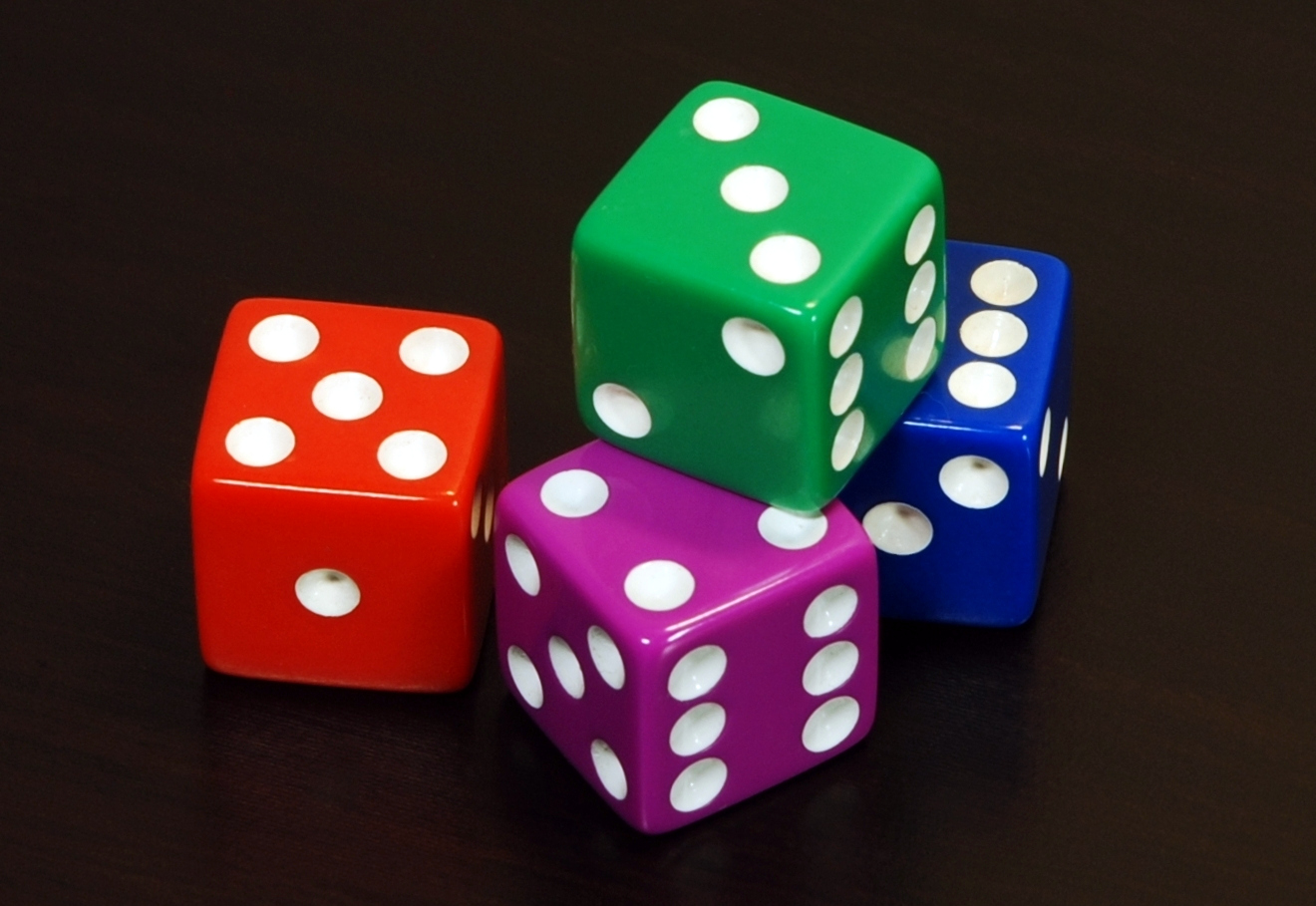
- Sample Space (S): The set of all possible outcomes of an experiment. For a standard six-sided die, the sample space is S={1,2,3,4,5,6}.
- Event (E): A subset of the sample space consisting of one or more outcomes we are interested in (e.g., rolling an even number: E={2,4,6}).
The Classical Probability Formula
When all outcomes in a sample space are equally likely, the theoretical probability of an event E occurring, denoted as P(E), is calculated using the formula:
P(E)=Total number of possible outcomes, n(S)Number of favorable outcomes, n(E)
Example 1: Rolling a Die
If a fair six-sided die is rolled once, find the probability of obtaining a prime number.
- Identify the Sample Space (S): S={1,2,3,4,5,6}, so n(S)=6.
- Identify the Event (E): Prime numbers on a die are {2,3,5}, so n(E)=3.
- Calculate Probability:
P(E)=n(S)n(E)=63=21 (or 0.5)
Complementary Events
The complement of an event E (written as E′) is the event that E does not occur. Because an event must either happen or not happen, the sum of their probabilities is always 1:
P(E)+P(E′)=1⟹P(E′)=1−P(E)

Example 2: Marbles in a Bag
A bag contains 5 red marbles, 3 blue marbles, and 2 green marbles. If one marble is drawn at random, what is the probability that it is not red?
- Total Outcomes (n(S)): 5+3+2=10 marbles.
- Probability of Red (P(R)): 105=21.
- Probability of NOT Red (P(R′)):
P(R′)=1−P(R)=1−21=21 (or 0.5)
Real-World Scenarios
Probability is not just an abstract mathematical game; it is a vital tool used across various global industries.
- Weather Forecasting: Meteorologists analyze historical atmospheric data to calculate the probability of precipitation. When a weather app indicates a "70% chance of rain," it means that under similar atmospheric conditions in the past, it rained 70% of the time.
- Insurance and Risk Assessment: Actuaries use probability to determine the likelihood of accidents, illnesses, or property damage. This statistical analysis helps insurance companies set policy premiums that are fair yet financially sustainable.

Practical Applications
In competitive board games like Ludo or Monopoly, players continuously make strategic choices based on the probability of rolling a specific number combination to secure a win or avoid landing on an opponent's property. To explore this concept at home, flip a coin 30 times, record the number of heads and tails, and compare your experimental results to the theoretical probability of 0.5.
Student Reflection Questions
Active learning requires questioning and analyzing concepts deeply. Write down your answers to the following questions in your study notebook:
- If you spin a spinner divided into 8 equal sectors numbered 1 to 8, what is the probability of landing on a number that is a multiple of 3?
- Explain the difference between an outcome and an event, using the example of drawing a card from a standard deck of 52 playing cards.
- Suppose the probability of an event happening is 72. Why must the probability of it not happening be 75? Show your mathematical reasoning.
